
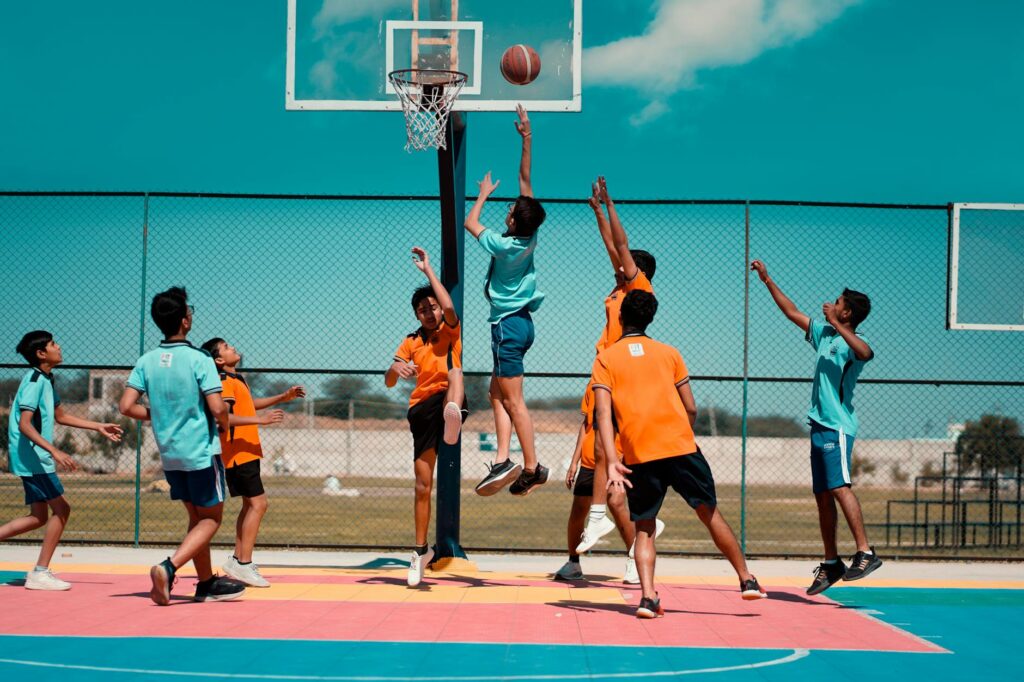
So, you’ve heard the buzz about LUSV basketball and you’re curious? Maybe you’ve seen people playing, or a friend invited you to join, but you’re thinking, “What exactly is LUSV basketball, and how do I even start?” Don’t worry, you’re in the right place! This guide is designed specifically for you – the complete beginner. We’ll break down every concept simply, from the absolute basics of the court to scoring points and understanding the flow of the game. By the end, you’ll have a solid grasp of LUSV basketball and feel ready to step onto the court yourself.
Important: LUSV basketball, while a unique term, refers to the general principles and practice of playing basketball. The core rules and objectives remain consistent with the widely recognized sport of basketball. This guide will cover these fundamental aspects.
Latest Update (April 2026)
As of April 2026, the global basketball community continues to evolve, with a strong emphasis on player development and accessibility. Organizations like FIBA (International Basketball Federation) are actively promoting initiatives to standardize rules and encourage participation across all age groups and skill levels. Recent reports indicate a surge in recreational basketball leagues worldwide, partly fueled by the sport’s inherent social nature and the increasing availability of public courts. Furthermore, advancements in sports technology are beginning to influence how players train and analyze their game, though the fundamental skills of dribbling, passing, and shooting remain paramount, especially for beginners entering the LUSV basketball scene.
What is LUSV Basketball?
At its heart, LUSV basketball is a dynamic team sport played by two teams, typically with five players each on the court at a time. The main objective is simple: to score points by shooting a ball through a hoop (the basket) elevated at each end of the rectangular court. While the name might sound specific, think of ‘LUSV’ as a way to refer to the game of basketball itself, perhaps in a particular context or league, but the fundamental gameplay remains the same. It’s a game that tests your agility, strategy, teamwork, and shooting skills. It’s fast-paced, requires constant movement, and offers a fantastic way to get exercise and build camaraderie.
Experts note that basketball’s universality is one of its greatest strengths. You can find a pickup game in almost any park, and the basic rules are understood globally. The ‘LUSV’ designation doesn’t change the essence of trying to outscore your opponent by putting the ball in the hoop. According to FIBA, the governing body for international basketball, the sport continues to grow in popularity, with millions of players worldwide participating in organized leagues and informal games.
The LUSV Basketball Court and Equipment
To play LUSV basketball, you need a few key things. The playing area is a rectangular court, usually made of hardwood for indoor games or asphalt for outdoor courts. It’s marked with various lines: the center line divides the court into two halves, the sidelines and baselines form the boundaries, and the three-point line arcs around the basket. The most crucial elements are the two basketball hoops, each consisting of a rim and net, set at a height of 10 feet (3.05 meters) from the ground. The ball itself is typically orange, spherical, and made of leather or synthetic material, designed for grip and bounce. Official basketballs come in various sizes, with size 7 being standard for men’s professional and collegiate play, size 6 for women’s and younger boys, and size 5 for younger players.
For beginners, understanding the court layout is the first step. Knowing where the boundaries are prevents unnecessary turnovers, and understanding the significance of the three-point line (more on that later) is key to scoring strategy. The equipment is standard and widely available, making LUSV basketball an accessible sport to pick up. Many community centers and parks offer public courts, and entry-level basketballs and shoes are reasonably priced.
Basic Rules of LUSV Basketball Play
The game typically starts with a jump ball at the center circle, where one player from each team attempts to tip the ball to a teammate after the referee tosses it up. Once a team gains possession, they aim to advance the ball towards the opponent’s basket. Players can move the ball by dribbling (bouncing it continuously) or passing it to a teammate. A key rule is that you cannot run with the ball without dribbling – this is called ‘traveling’.
Teams have a limited time to shoot the ball once they gain possession in their offensive half; this is known as the shot clock, which is commonly 24 seconds in professional and college leagues, though it might be longer or absent in casual play. Players must also stay within the court boundaries. When a player is in the act of shooting, defensive players must avoid physical contact to prevent fouling. The game is officiated by referees who enforce the rules and call fouls or violations to ensure fair play.
How to Score Points in LUSV Basketball
Scoring is the ultimate objective in LUSV basketball. Points are awarded when the ball successfully passes through the opponent’s hoop from above. The number of points awarded for a successful shot depends on the shooter’s location on the court relative to the three-point line.
- Two-Point Field Goal: A shot made from anywhere inside the three-point arc is worth two points. This is the most common type of score.
- Three-Point Field Goal: A shot made from beyond the three-point arc (the longer, curved line on the court) is worth three points. This rewards accurate long-range shooting and adds a strategic element to offensive plays.
- Free Throw: These are uncontested shots awarded to a player who has been fouled. Each successful free throw is worth one point. Free throws are typically taken from the free-throw line, which is 15 feet from the backboard.
The final score is determined by the accumulation of these points. The team with the highest score at the end of the designated playing time wins the game. As FIBA rules outline, games are divided into quarters (usually four quarters of 10 or 12 minutes, depending on the league) with breaks in between.
Essential Player Actions: Dribbling, Passing, and Shooting
Mastering the fundamental skills is essential for enjoying and succeeding in LUSV basketball. These core actions are the building blocks of gameplay.
Dribbling
Dribbling is how players move the ball up the court and create scoring opportunities. It involves bouncing the ball continuously with one hand. Key rules to remember include:
- No Traveling: You cannot take steps while holding the ball without dribbling.
- No Double Dribble: Once you stop dribbling and hold the ball, you cannot start dribbling again until another player on either team touches the ball. Also, dribbling with both hands simultaneously is a violation.
Reports indicate that consistent dribbling practice significantly improves ball control and confidence on the court. Beginners often struggle with these violations initially; consistent practice with a basketball is the best way to build muscle memory.
Passing
Passing is crucial for team play, allowing the ball to be moved quickly and efficiently between teammates. Effective passing creates scoring chances and breaks down defensive formations. Common types of passes include:
- Chest Pass: A two-handed pass thrown from the chest to the receiver’s chest. It’s accurate and relatively quick.
- Bounce Pass: The ball is bounced once on the floor before reaching the receiver. This is useful for getting the ball around defenders.
- Overhead Pass: A two-handed pass thrown from above the head. It can be used to pass over shorter defenders or to initiate a fast break.
According to basketball coaching resources, developing good court vision to anticipate where teammates will be is as important as the physical act of passing.
Shooting
Shooting is how points are scored. While it takes practice, understanding the basic technique is key. A common shooting form involves:
- B.E.E.F. Acronym: This popular mnemonic stands for Balance, Eyes, Elbow, Follow-through.
- Balance: Ensure your feet are shoulder-width apart, knees slightly bent, providing a stable base.
- Eyes: Focus on the target – the rim or back of the rim.
- Elbow: Keep your shooting elbow tucked in, aligned under the ball.
- Follow-through: Extend your shooting arm fully towards the basket and snap your wrist downwards, like reaching into a cookie jar.
Players are encouraged to practice shooting from various distances and angles to develop versatility. According to independent analyses of player performance, consistent shooting practice from different spots on the court, simulating game conditions, leads to improved accuracy.
Understanding Fouls and Violations
Basketball, like any sport, has rules to ensure fair play. Violations and fouls are infractions that can result in a loss of possession or free throws for the opposing team.
Violations
Violations are infractions that do not involve physical contact and typically result in the other team gaining possession of the ball at the nearest sideline.
- Traveling: Taking too many steps without dribbling the ball.
- Double Dribble: Dribbling with two hands simultaneously or dribbling, stopping, and then dribbling again.
- Shot Clock Violation: Failing to attempt a shot within the allotted time (e.g., 24 seconds).
- Backcourt Violation: Once the offensive team crosses the half-court line with the ball, they cannot return it to the backcourt.
- Out of Bounds: Stepping on or outside the boundary lines while in possession of the ball, or causing the ball to go out of bounds.
Fouls
Fouls involve illegal physical contact with an opponent. The type of foul and the game situation determine the penalty.
- Personal Foul: Illegal physical contact, such as pushing, holding, blocking, or tripping an opponent. In most leagues, a player is disqualified after committing a certain number of personal fouls (typically five or six).
- Shooting Foul: A personal foul committed against a player who is in the act of shooting. This results in free throws for the shooter (two free throws if the shot was missed and taken inside the three-point arc, three if taken beyond it, and one if the shot was made).
- Flagrant Foul: Excessive or violent contact. These carry more severe penalties, often including free throws and possession of the ball for the non-offending team, and potential ejection of the offending player.
- Technical Foul: A foul related to unsportsmanlike conduct, arguing with officials, or certain procedural violations. Penalties usually involve free throws and possession.
According to FIBA’s official rulebook, understanding these distinctions is vital for players to avoid penalties and for spectators to follow the game’s flow.
Beginner Tips for LUSV Basketball Success
Stepping onto the court for the first time can be intimidating, but focusing on a few key areas will build your confidence and skill.
- Master the Fundamentals: Spend time practicing dribbling, passing, and shooting in a low-pressure environment. Consistency is key.
- Understand Spacing: Learn to move without the ball. Don’t stand still; find open spaces on the court where you can receive a pass or create an opportunity.
- Communicate: Talk to your teammates! Call out screens, let them know if you’re open, and encourage each other. Good communication is a hallmark of effective team play.
- Play Defense: Defense wins championships! Focus on staying between your opponent and the basket, using your feet to move, and contesting shots without fouling.
- Watch and Learn: Observe experienced players. Pay attention to their movements, decision-making, and how they execute skills. Watching professional games can also be educational.
- Stay Positive: Everyone makes mistakes, especially when learning. Focus on improvement, celebrate small victories, and enjoy the process of learning LUSV basketball.
Independent coaching resources emphasize that a positive attitude and a willingness to learn are the most important attributes for beginner basketball players.
Frequently Asked Questions
What is the main objective of LUSV basketball?
The primary objective of LUSV basketball is to score more points than the opposing team by shooting the ball through the opponent’s basket while preventing the other team from scoring in yours. The team with the higher score at the end of the game wins.
How many players are on a LUSV basketball team?
Typically, a LUSV basketball team has five players on the court at any given time. However, teams usually have substitute players on the bench who can enter the game during stoppages.
What is the difference between a foul and a violation in LUSV basketball?
A violation generally refers to an infraction of the rules that does not involve illegal physical contact, such as traveling or double dribbling. A foul, on the other hand, involves illegal physical contact with an opponent. Violations usually result in a turnover, while fouls can lead to free throws for the opposing team and potentially player disqualification.
How long is a LUSV basketball game?
The length of a LUSV basketball game varies depending on the league or level of play. Professional and college games are typically divided into four quarters, lasting 10 or 12 minutes each. Recreational or youth games may have shorter quarters or be played in halves.
What is the significance of the three-point line?
The three-point line is an arc marked on the court. Shots made from behind this line are worth three points, while shots made from inside the line are worth two points. This line encourages different offensive strategies and rewards players for long-range shooting accuracy.
Conclusion
LUSV basketball, at its core, is an engaging and accessible sport that offers physical exercise, strategic thinking, and great fun. By understanding the court, basic rules, scoring methods, and fundamental player actions like dribbling, passing, and shooting, beginners can quickly gain confidence. Remember to focus on the fundamentals, communicate with your teammates, and maintain a positive attitude. Whether you’re playing in a formal league or a casual pickup game, the principles remain the same. So grab a ball, find a court, and experience the excitement of LUSV basketball for yourself.