
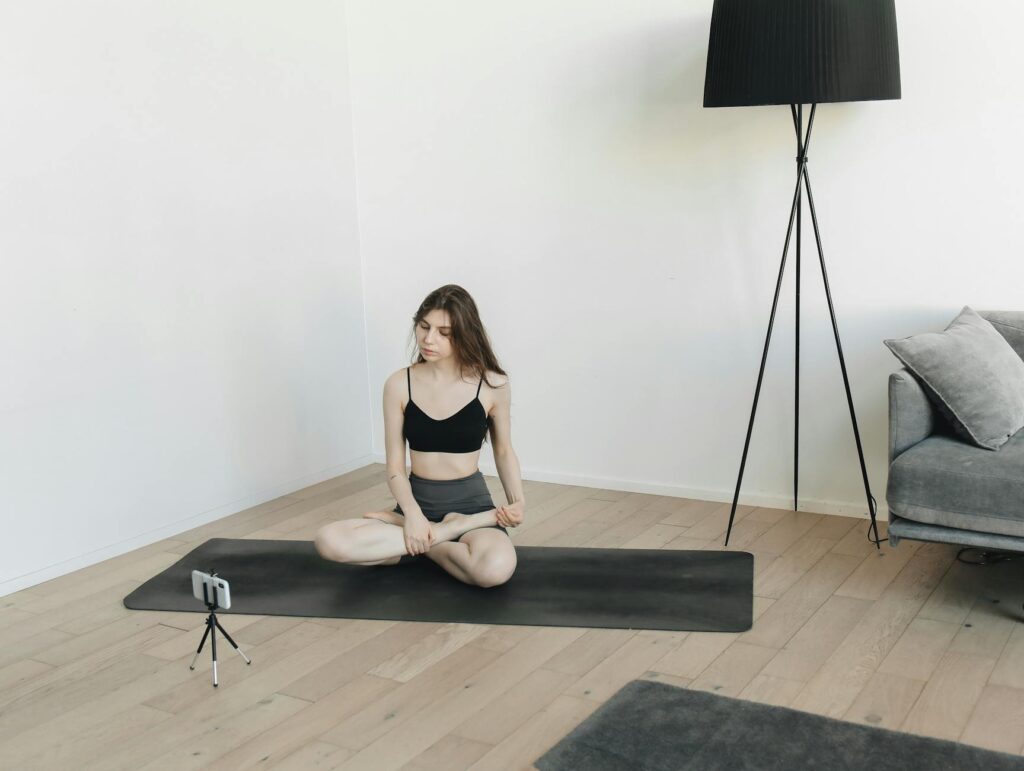
The Best Workout Routine for Beginners at Home: Your No-Excuses Guide
Struggling to start a fitness journey because the gym feels intimidating, or you simply can’t find the time? You’re not alone. Many beginners feel lost when it comes to creating an effective workout routine, especially when aiming for home-based fitness. The good news is, the best workout routine for beginners at home is accessible, requires no fancy equipment, and can be tailored to your schedule, helping you build a solid foundation for a healthier life.
The best workout routine for beginners at home focuses on compound bodyweight movements that engage multiple muscle groups, coupled with basic cardio and flexibility exercises. This approach builds foundational strength, improves cardiovascular health, and enhances mobility, all without needing gym equipment. Consistency and proper form are key to seeing results and preventing injury.
Table of Contents
- What Exactly is a Beginner-Friendly Home Workout?
- What Are the Key Components of a Good Home Workout?
- Your Sample Beginner Workout Routine at Home
- How to Progress: The Power of Progressive Overload
- Nutrition and Hydration: Supporting Your Routine
- Common Mistakes to Avoid in Your Home Workout
- Expert Advice for Sustainable Home Fitness
What Exactly is a Beginner-Friendly Home Workout?
A beginner-friendly home workout is designed to introduce your body to physical activity safely and effectively. It emphasizes learning proper form over lifting heavy weights or performing complex moves. The goal is to build a base level of strength, endurance, and flexibility, making future fitness endeavors more achievable and enjoyable. This routine should be challenging enough to stimulate adaptation but not so difficult that it leads to burnout or injury.
For instance, instead of attempting a heavy barbell squat, a beginner might focus on mastering bodyweight squats, ensuring their knees track over their toes and their back remains straight. This foundational skill is crucial before adding external weight or more advanced variations. Think of it as learning the alphabet before writing a novel.
What Are the Key Components of a Good Home Workout?
The most effective workout routines, even for beginners at home, incorporate several essential elements to ensure comprehensive fitness development. These include cardiovascular exercise for heart health, strength training for muscle building and metabolism, and flexibility work for injury prevention and improved range of motion.
Cardiovascular Exercise: This elevates your heart rate and improves lung capacity. Aim for 20-30 minutes of moderate-intensity cardio most days of the week. Examples include brisk walking (if space allows), jogging in place, jumping jacks, or dancing to your favorite music. The Centers for Disease Control and Prevention (CDC) recommends at least 150 minutes of moderate-intensity aerobic activity per week for adults.
Strength Training: This builds muscle, which is vital for metabolism and overall function. For beginners, focusing on compound bodyweight exercises that work multiple muscle groups simultaneously is ideal. These exercises teach your body to work as a cohesive unit.
Flexibility & Mobility: Stretching and mobility exercises improve your range of motion, reduce muscle soreness, and help prevent injuries. Incorporate static stretches after your workouts and dynamic stretches before.
Your Sample Beginner Workout Routine at Home
This sample routine is designed to be performed 3 times per week, with at least one rest day in between each session. It’s a full-body workout that requires no equipment, making it the perfect starting point for anyone looking for the best workout routine for beginners at home.
Warm-up (5-10 minutes):
- Light cardio: Jogging in place, high knees, butt kicks (2-3 minutes)
- Dynamic stretches: Arm circles, leg swings, torso twists
Workout Circuit (Perform 2-3 rounds, resting 60-90 seconds between rounds):
- Bodyweight Squats: 10-12 repetitions
- Push-ups (on knees or toes): 8-10 repetitions
- Walking Lunges: 10-12 repetitions per leg
- Plank: Hold for 20-30 seconds
- Glute Bridges: 12-15 repetitions
- Jumping Jacks: 30 seconds
Cool-down (5-10 minutes):
- Static stretches: Hold each stretch for 20-30 seconds (quadriceps, hamstrings, chest, triceps, shoulders)
Important Note: Listen to your body. If an exercise causes sharp pain, stop immediately. It’s better to modify an exercise than to push through pain, which can lead to injury. For push-ups, starting on your knees is perfectly acceptable and still builds significant upper body strength.
How to Progress: The Power of Progressive Overload
Once you can comfortably complete the recommended repetitions and sets for a few weeks, it’s time to apply the principle of progressive overload. This means gradually increasing the demand on your muscles to continue making gains. Without this, your progress will plateau.
Progressive overload can be achieved in several ways:
- Increase Repetitions: Add 1-2 more reps to each exercise.
- Increase Sets: Add an extra round to your circuit.
- Decrease Rest Time: Shorten the rest period between sets or rounds.
- Increase Difficulty: Move from knee push-ups to toe push-ups, or try variations like Bulgarian split squats (using a chair).
- Increase Frequency: Add another workout day per week (ensure adequate rest).
- Increasing weight or intensity too quickly.
- Skipping rest days.
- Ignoring proper form to do more reps.
- Jumping to advanced exercises too soon.
For example, if you’re consistently doing 12 bodyweight squats for 3 rounds, try increasing to 15 reps, or adding a fourth round. The key is small, consistent increases. A study published in the Journal of Strength and Conditioning Research in 2022 highlighted that progressive overload is a fundamental principle for long-term muscle hypertrophy and strength gains.
Nutrition and Hydration: Supporting Your Routine
Your workout routine is only one piece of the fitness puzzle. What you eat and drink significantly impacts your energy levels, recovery, and results. Focusing on a balanced diet provides the fuel your body needs to perform and repair itself.
Hydration: Water is essential for nearly every bodily function, including exercise performance. Aim to drink water consistently throughout the day. A general guideline is to drink half your body weight in ounces of water daily. For example, if you weigh 150 pounds, aim for 75 ounces of water. Increase intake before, during, and after workouts.
Nutrition: Prioritize whole, unprocessed foods. Include lean protein sources (chicken, fish, beans, lentils), complex carbohydrates (whole grains, vegetables, fruits), and healthy fats (avocado, nuts, seeds). Protein is crucial for muscle repair and growth, while carbohydrates provide energy. A common mistake beginners make is severely restricting calories, which can lead to fatigue and hinder muscle recovery.
According to the Academy of Nutrition and Dietetics, adequate protein intake for active individuals can range from 1.2 to 2.0 grams per kilogram of body weight per day. For a 150 lb (approx. 68 kg) individual, this means roughly 82 to 136 grams of protein daily.
Common Mistakes to Avoid in Your Home Workout
Even with the best intentions, beginners can fall into common traps that hinder progress or lead to frustration. Awareness is the first step to avoidance.
- Inconsistency: Sporadic workouts yield minimal results. Aim for consistency, even if sessions are short.
- Poor Form: Rushing through exercises without focusing on proper technique. This is a fast track to injury. Watch videos, use a mirror, or record yourself.
- Overtraining: Doing too much too soon, not allowing adequate rest. This leads to fatigue, decreased performance, and potential injury.
- Unrealistic Expectations: Expecting drastic changes overnight. Fitness is a journey, not a race. Celebrate small wins.
- Neglecting Warm-up/Cool-down: Skipping these crucial phases increases injury risk and hinders recovery.
Expert Advice for Sustainable Home Fitness
Building a sustainable fitness habit at home is about more than just the exercises themselves. It involves mindset, planning, and continuous learning. Here’s some advice from fitness professionals:
Start Small and Build Gradually: Don’t try to do too much too soon. Begin with shorter workouts and fewer sets/reps. As you get stronger, you can increase the intensity and duration. This makes the process less daunting and more sustainable.
Find What You Enjoy: If you dread your workouts, you won’t stick with them. Experiment with different types of exercises—dance, yoga, bodyweight circuits, or even active video games. The best routine is one you’ll actually do consistently.
Create a Dedicated Space: Even a small corner of a room can become your workout zone. This mental separation helps you get into the right mindset. Keep any minimal equipment you might use (like resistance bands) there.
Schedule Your Workouts: Treat your workouts like important appointments. Block out time in your calendar. This accountability makes it harder to skip.
Seek Knowledge: Continue learning about exercise and fitness. Resources like the American College of Sports Medicine (ACSM) provide evidence-based information on exercise science. Understanding the ‘why’ behind your routine can boost motivation.
Celebrate Progress, Not Perfection: Acknowledge your achievements, no matter how small. Did you hold a plank for 5 seconds longer? Did you do one more push-up? These are wins. Don’t let a missed workout derail your entire week. Just get back on track with the next scheduled session.
Frequently Asked Questions
How often should a beginner work out at home?
Beginners should aim to work out 2-3 times per week, allowing at least one rest day between sessions. This frequency provides sufficient stimulus for adaptation while allowing the body adequate time to recover and rebuild muscle tissue, crucial for preventing overtraining.
What are the best bodyweight exercises for beginners?
The best bodyweight exercises for beginners include squats, lunges, push-ups (modified on knees if needed), planks, glute bridges, and bird-dogs. These compound movements target major muscle groups and help build a solid foundation of strength and stability.
Do I need any equipment for a beginner home workout?
No, you do not need any special equipment to start. The best workout routine for beginners at home can be effectively performed using only your body weight. As you progress, you might consider minimal items like resistance bands or dumbbells.
How long should a beginner workout session last?
Beginner workout sessions can range from 20 to 45 minutes, including warm-up and cool-down. The focus should be on quality of movement and consistency rather than duration. Shorter, consistent workouts are more effective than infrequent, long ones.
How do I know if my form is correct?
Ensure your form is correct by watching instructional videos from reputable sources like ACE Fitness, using a mirror to check your posture, or recording yourself during exercises. Focus on controlled movements and alignment rather than speed or quantity.
Start Your Home Fitness Journey Today
The best workout routine for beginners at home is within your reach. By focusing on fundamental movements, maintaining consistency, and listening to your body, you can build a strong, healthy physique right from your living room. Remember that every journey begins with a single step, and today is the perfect day to take yours.